Next‑Generation Control for Next‑Generation Greenhouses: DeVry & Argus Axia
For more than three decades, DeVry Greenhouses has been a quiet powerhouse in North America’s ornamental horticulture industry. Founded in 1989 by a Dutch grower who brought his greenhouse expertise to Canada, the company has grown into an industry leader spanning 80 acres of glass, thousands of acres of nursery and farmland, and multiple locations across British Columbia, Alberta, and Michigan.
Today, DeVry supplies bedding plants, decorative containers, and nursery stock to major retailers across every Canadian province and nearly every U.S. state - a scale that demands precision, efficiency, and reliability in every aspect of production.
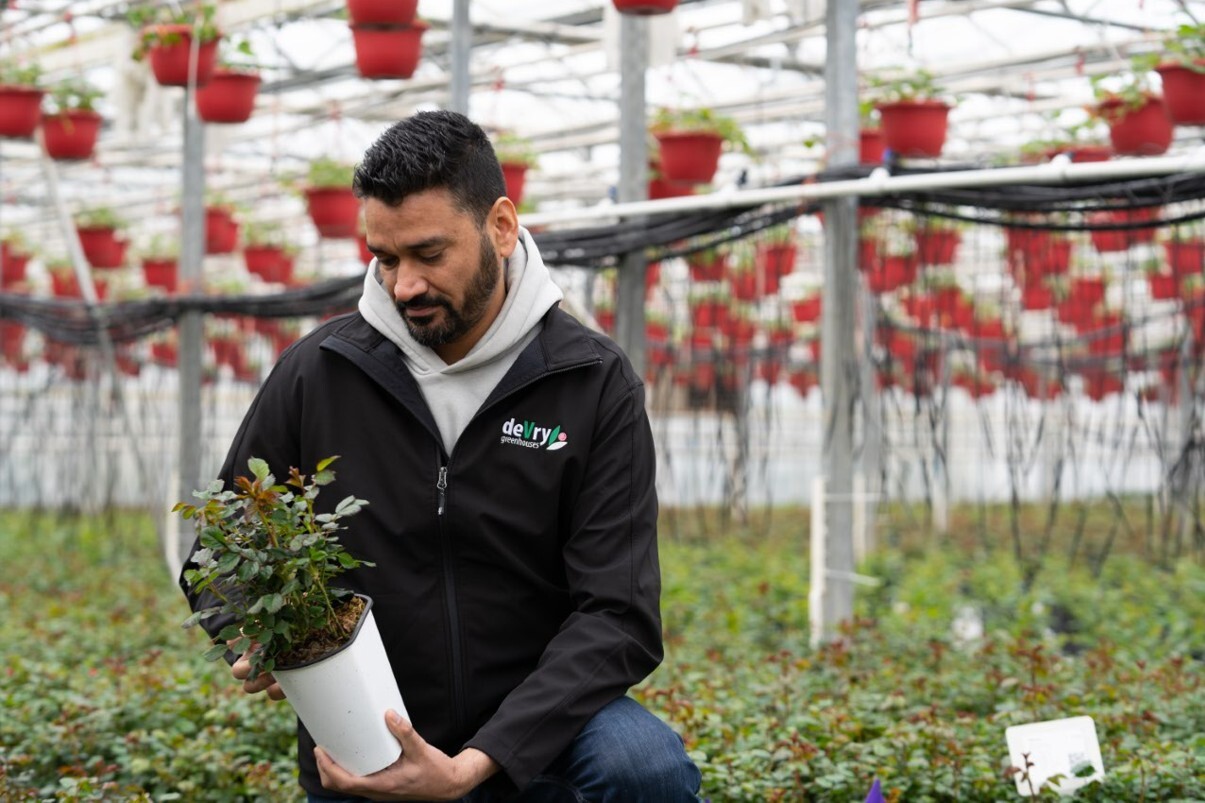
Rajvir Prasher, Growing Director at DeVery Greenhouses inspects plants in one of DeVry’s many greenhouses. As DeVry’s footprint continues to grow and diversify, Argus environmental controls help ensure every plant meets the same high standard for quality and consistency.
A Growing Operation Powered by Technology
With such a diverse and rapidly expanding footprint, DeVry relies heavily on automation to maintain crop quality and operational consistency across all sites. Argus environmental controls have been part of the DeVry story for years, helping the team manage:
Glass and poly greenhouses
Multi‑zone propagation houses
Heated poly bays
Advanced environmental sensors
Precision irrigation systems
As Head of Greenhouse Technology Josh van Oort explains, environmental automation at DeVry is not just convenient - it’s critical:
“Environmental control is extremely important for our growers. It frees them from constantly making manual adjustments and allows them to spend more time in the crop where it matters most.”
With hundreds of varieties in play at any given time, DeVry’s growers depend on Argus to maintain stable climate conditions, simplify complex workflows, and reduce the risk of crop loss - especially overnight, when manual intervention isn't feasible.
Innovating With Argus Axia
DeVry is currently integrating Argus Controls’ next generation plant‑centric control system offering - Argus Axia. Axia’s integration is taking place at a multi‑zone glasshouse in Chilliwack, supported by a propagation house and a series of heated poly bays.
The team selected this site for its straightforward layout, making it an ideal environment for evaluating new features before rolling them out to its more complex facilities.
Alongside Axia, DeVry is trialing several advanced sensing technologies:
Apogee Guardian sensors capturing temperature, humidity, CO₂, and PPFD
DLI‑based lighting control to optimize artificial lighting
Net radiation sensors for precision shade‑curtain automation (especially valuable in Alberta’s extreme climate)
These innovations allow DeVry to push efficiency further, reducing energy use while supporting optimal light and heat management.
Anything we can automate to prevent alarms and keep the greenhouse stable overnight is a huge benefit. We rely heavily on Argus across all our facilities.
- Josh van Oort, Head of Greenhouse Technology
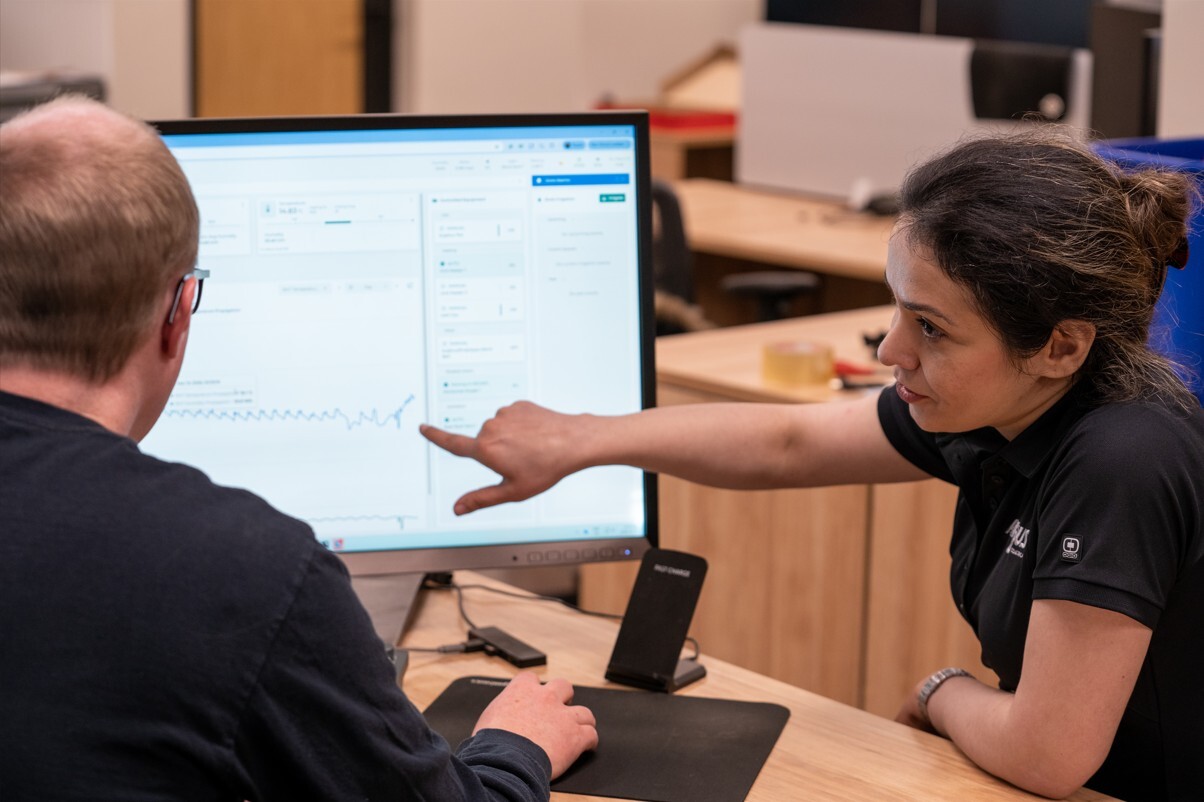
Argus Axia software currently being used at one of DeVry’s many greenhouses.
Supporting Growers, Improving Consistency
For DeVry, the value of Argus goes beyond energy savings or yield improvements. It’s about giving growers confidence and control in an increasingly complex production environment.
We rarely have a single crop in a full zone. Argus allows us to set general conditions that support many varieties at once, while still giving us the precision we need for specialty crops like cucumbers.
- Josh van Oort, Head of Greenhouse Technology
Automation has also reduced the need for manual climate interventions, enabling staff to focus on higher‑value horticultural work - scouting, crop assessment, and quality optimization.
A Partnership Built on Growth
DeVry's long‑standing use of Argus reflects years of collaboration, trust, and continuous improvement. The Argus Axia introduction marks the next phase of the longstanding partnership, supporting DeVry’s evolution as it expands into new regions and integrates more advanced technologies.