Some greenhouse projects follow a familiar blueprint. Others begin with an architect's concept, a complex research program, or a vision that has never been built before.
Those projects require more than a greenhouse manufacturer. They require a partner that can translate ambitious ideas into environments that perform exactly as intended.
That's where GGS has built its reputation.
Based in Vineland, Ontario, the company brings more than 45 years of greenhouse expertise to commercial, institutional, and research projects across North America and around the world. While GGS builds everything from commercial growing facilities and fabric-covered structures to botanical gardens and conservatories, its specialty lies in the projects others often consider too complex - highly customized research greenhouses, university facilities, and architect-driven designs that demand creative problem solving.
For more than 25 years, GGS and Argus have partnered on many of these specialized facilities, combining custom greenhouse design with advanced environmental controls to help researchers and growers bring ambitious projects to life.
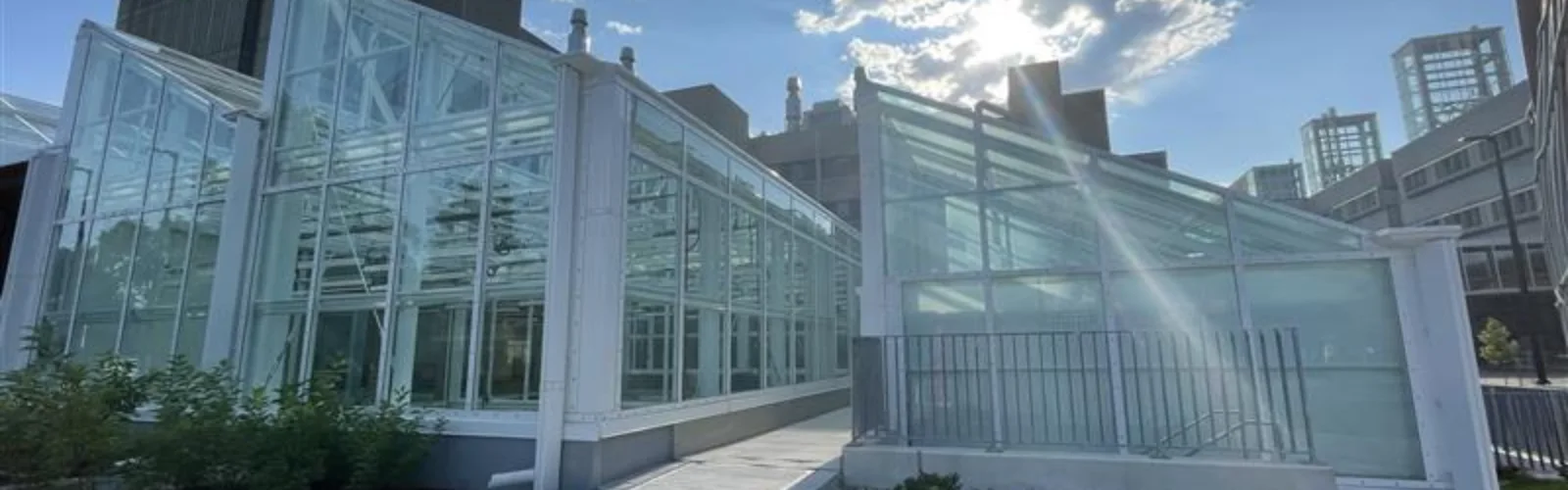
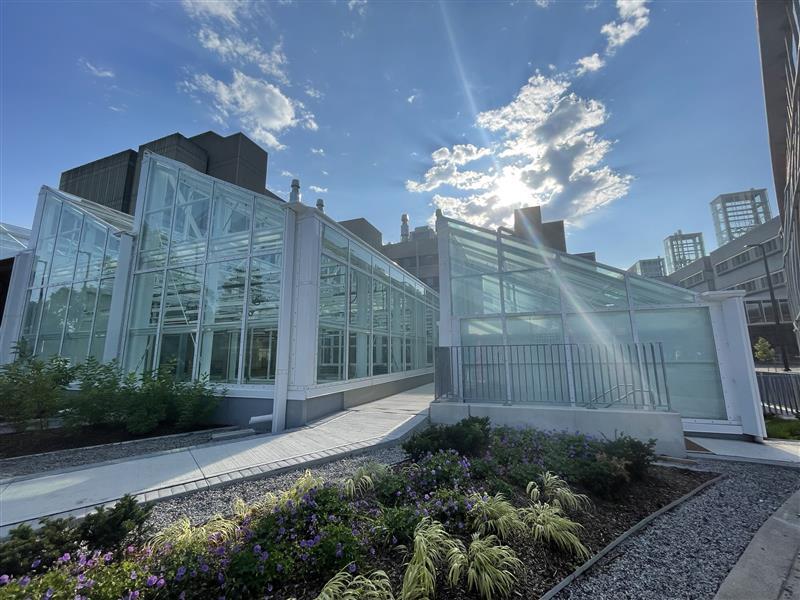
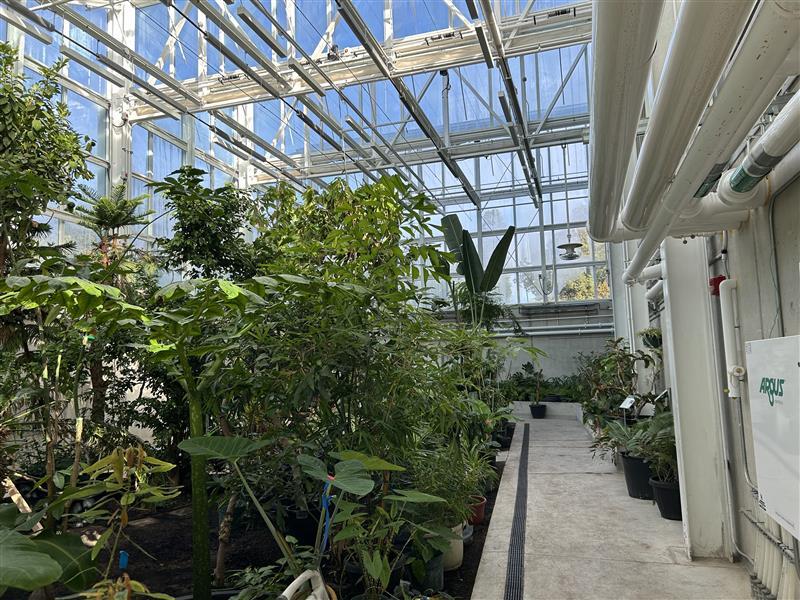
The GGS-built research greenhouse at McMaster University combines a custom sawtooth structure with specialized growing zones and Argus environmental controls.
Turning Complex Concepts Into Working Greenhouses
GGS supports greenhouse projects across a wide range of sizes and applications, but its greatest strength lies in projects that don't fit a standard model. Research and institutional facilities often involve unique architectural designs, specialized environmental zones, detailed bid requirements, and multiple stakeholders.
GGS helps turn those requirements into greenhouses that not only reflect the original vision but also perform as intended.
"We thrive in the gray, in the complexity, and in taking conceptual ideas and bringing them to life," said Brandon Greco, Business Development Manager at GGS. "We'll take on the projects that a lot of people tend to shy away from. Those are the projects we prefer."
That willingness to customize doesn't mean following a design without question. GGS works closely with architects, general contractors, researchers, and technology partners throughout the design process, contributing greenhouse expertise that helps identify potential challenges before construction begins.
As Greco explained, "We're willing to think outside the box, customize, and deliver a structure or solution that achieves what the client envisions. We provide our expertise to make sure something isn't going to fail, but we're also happy to work with what's been designed and help bring that project to life."
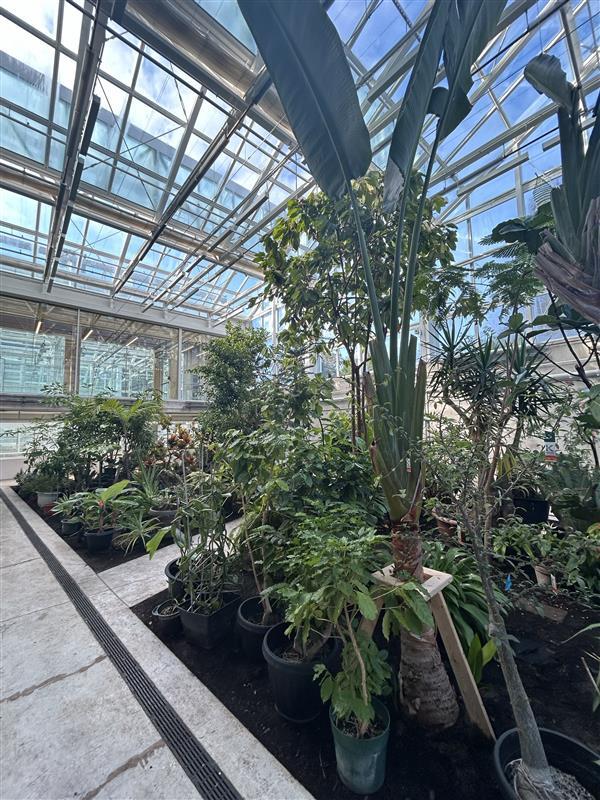
Specialized zones within the McMaster University greenhouse support distinct plant collections and research requirements.
Collaboration Throughout the Project Lifecycle
On large institutional projects, the definition of "the client" often changes as the project progresses. GGS may begin by working with a general contractor during procurement, bidding, and construction before ultimately handing the completed facility over to the university, researcher, or greenhouse operator who will manage it every day.
That makes collaboration essential from start to finish. GGS works closely with partners like Argus from the RFP and specification phase through design, construction, installation, commissioning, training, and final turnover, helping ensure the greenhouse structure, equipment, and environmental controls are planned as one integrated solution.
"We both have client-first, customer-oriented mindsets,” Greco emphasized, “and the ability to collaborate with our partners on seamless integration for controls and structure, so everything comes together in a way that's ultimately going to make the client happy."
For GGS, that collaboration is backed by deep technical expertise. On complex projects, pricing and standardization matter, but Greco emphasized that the first priority is ensuring every required control point, system, and specification has been properly accounted for before construction begins.
That shared attention to detail helps create a smoother integration between the greenhouse structure and its controls while giving end users greater confidence that the facility will perform as intended from day one.
The GGS and Argus relationship brings together complementary expertise: GGS designs and builds the greenhouse itself, while Argus delivers the environmental controls that help it perform as intended.
- Brandon Greco, Business Development Manager at GGS
Argus Control Systems are integrated into the greenhouse infrastructure to support precise management of specialized growing environments. Advanced control capabilities help ensure consistency while minimizing variability.
McMaster University: Designing for Complexity & Performance
The greenhouse at McMaster University is one of the projects that best reflects what GGS and Argus bring to a complex research environment.
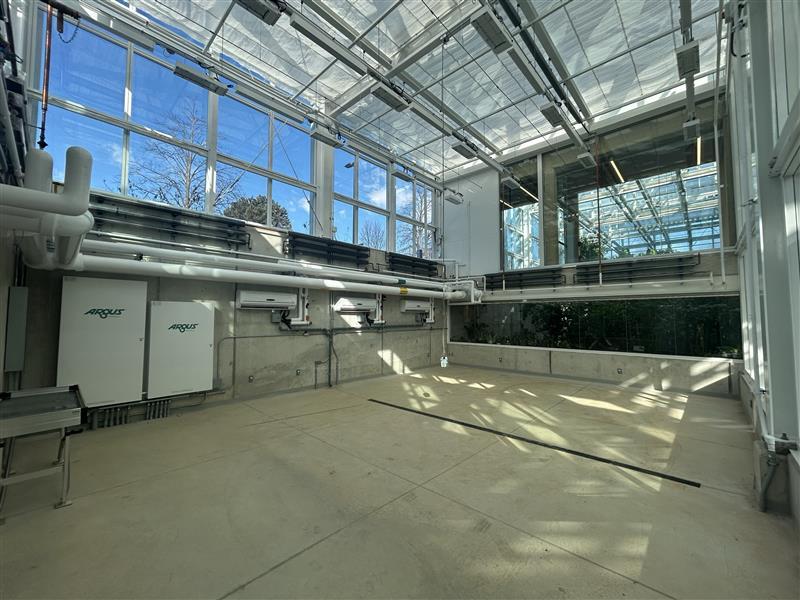
The custom sawtooth greenhouse features a white powder-coated superstructure, one tropical zone, two large research zones, and seven smaller research zones. Its integrated systems include lighting, irrigation, vertical and horizontal shading, and ventilation, all supported by Argus controls.
One of the facility’s most distinctive features is its sunken design. The greenhouse sits approximately eight feet below grade on a concrete foundation, while the structure rises more than 20 feet above it.
Recessing the lower portion allows the surrounding earth to provide additional insulation and helps create a more consistent temperature than a fully above-grade structure would experience.
Although the concept originated with the project architect, GGS contributed greenhouse expertise needed to validate the design and ensure it could function as intended. The result is a facility that demonstrates how architecture, engineering, environmental controls, and greenhouse construction can come together around highly specialized research requirements.
For Greco, it is a defining GGS project precisely because it is difficult to categorize as standard.
“It really showcases what we thrive in,” he said. “The complexity, the customization, and the projects that set us apart.”
A dedicated research zone at McMaster University integrating Argus controls.
The Power of Partnership
The GGS and Argus relationship brings together complementary expertise: GGS designs and builds the greenhouse itself, while Argus delivers the environmental controls that help it perform as intended.
For Greco, however, the partnership goes beyond technical capabilities. It's built on a shared approach to solving problems and a commitment to helping customers succeed.
"We're a strong partner of Argus because Argus works hand in hand with us,” Greco noted. “Our willingness to find solutions and customize despite complexity in any of our projects is what really make us both tick."
That collaborative approach is especially valuable on research and institutional projects, where every greenhouse is different and environmental requirements can vary from one zone to the next. By working together from planning through commissioning and turnover, GGS and Argus help ensure each facility operates as a cohesive whole.
Looking Ahead
As greenhouse projects become more sophisticated, customization and integration will remain central to GGS’s work. Research programs, architectural concepts, and sustainability goals continue to shape increasingly specialized greenhouse environments, while customers still want projects easy to specify, price, operate, and support.
GGS approaches that challenge through what its team calls continuous improvement: preserving the flexibility to solve unconventional problems while finding ways to simplify processes and make complex projects easier to deliver.
Together, GGS and Argus combine greenhouse construction and environmental controls expertise to help customers bring ambitious projects to life. Their long-standing partnership delivers facilities that are thoughtfully designed, technically sound, and built to perform for the researchers, growers, and institutions that rely on them.